
The Emigrants’ New Identity
The EmigrantsThis flow traces how the travelers move from a publicly rejected group in Ljuder to newcomers admitted ashore but not yet settled.
increasing Bearing strength in each event
 decreasing
Bearing strength in each eventdecreasingA Parish Calls Them Rash
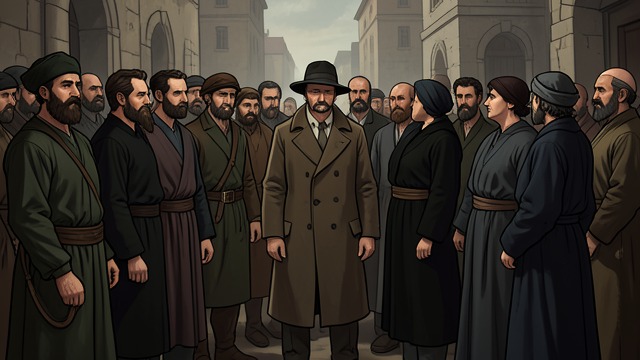
A Parish Calls Them Rash
Community judgment
Neighbors and elders question the decision to abandon a farm for an unseen country. The emigrants are treated as people who reject their own community.
A group apart
Even before departure, the travelers become socially distinct. Their shared plan binds them together while increasing their distance from those who remain.
Seen as Gypsies
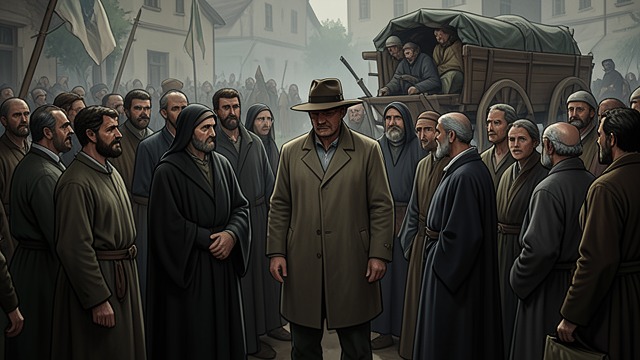
Seen as Gypsies
A public spectacle
The loaded wagons attract curious stares, and Jonas Petter of Hästebäck compares them to gypsy carts. The travelers recognize how their belongings make them look displaced.
Defending respectability
Robert Nilsson wants strangers to know they are honest emigrants. Their identity is already being negotiated through other people’s assumptions.
A Homeless Company
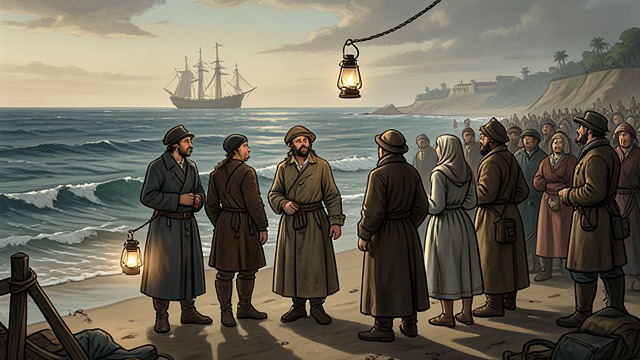
A Homeless Company
Between countries
The emigrants have left their homes but have not reached new ones. Their ship is a temporary shelter surrounded by a sea that offers no place to settle.
Bonds through dependence
Shared rations, sickness, and confinement force the travelers into one another’s presence. Their company becomes a substitute for the homes they have lost.
Remembered at Sea
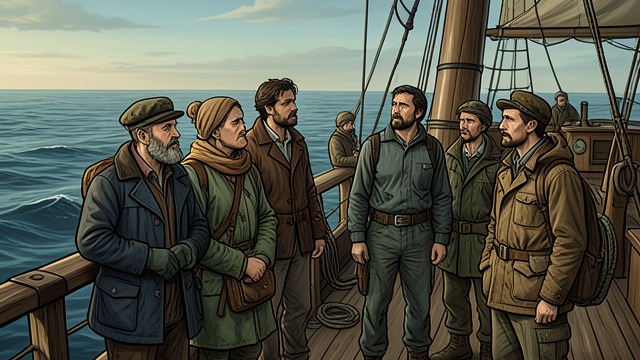
Remembered at Sea
Home reappears in memory
The travelers encounter a Swedish ship heading home and realize they still think of Sweden as home. Familiarity persists even after they have rejected the conditions there.
Shared estrangement
No one aboard knows exactly where the future will take them. Their uncertain destination creates a temporary bond among people who otherwise have little in common.
Newcomers at the Pier
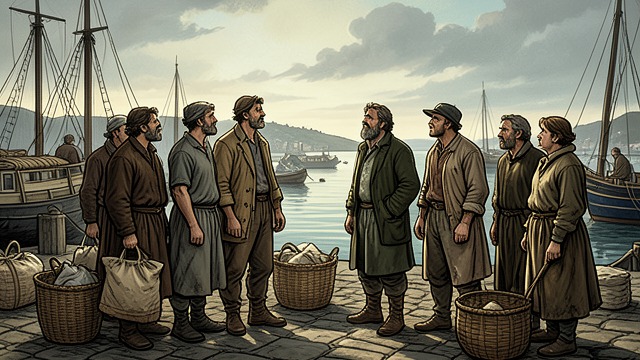
Newcomers at the Pier
Admitted but poor
The emigrants arrive in worn clothes with chests, baskets, and bundles. They appear shabby beside the harbor, yet the new country admits them.
Identity still unfinished
They have changed their location but not yet secured farms, work, or acceptance. The collective story of departure gives way to the practical question of settlement.
After Karl Oskar announces his plan
On the road through Blekinge
After the English coast disappears
During the second month of the crossing
Midsummer Eve, 1850, during disembarkation
